Abstract
BPC-157, a synthetic peptide derived from a protective gastric protein, has garnered attention for its potential therapeutic benefits in tissue repair, gastrointestinal health, and inflammation modulation. The arginine salt form of BPC-157 is particularly noteworthy due to its enhanced stability and bioavailability. This article delves into the pharmacokinetics of BPC-157 arginine salt, its mechanisms of action, and its effects on healing processes, gut integrity, and inflammatory responses.(HubMedEd, Reddit)
Introduction
Body Protective Compound-157 (BPC-157) is a 15-amino acid peptide fragment derived from human gastric juice. Known for its regenerative properties, BPC-157 has been studied for its role in promoting tissue healing, protecting the gastrointestinal tract, and modulating inflammatory processes. The arginine salt form of BPC-157 has been developed to enhance its stability and bioavailability, making it a promising candidate for therapeutic applications.(PubMed Central)
Bioavailability and Pharmacokinetics of BPC-157 Arginine Salt
The effectiveness of any therapeutic agent is closely tied to its bioavailability—the proportion of the drug that enters circulation and can exert its effects. Peptides like BPC-157 often face challenges in oral administration due to degradation by gastric acids and enzymes. However, the arginine salt form of BPC-157 has demonstrated improved stability in acidic environments, enhancing its oral bioavailability.(Reddit)
A study investigating the pharmacokinetics of BPC-157 in rats and dogs revealed that after intramuscular administration, BPC-157 reached peak plasma concentrations rapidly, with a half-life of less than 30 minutes. The bioavailability observed was approximately 14%–19% in rats and 45%–51% in beagle dogs. These findings underscore the peptide’s rapid absorption and distribution, as well as its potential for systemic therapeutic effects. (PubMed Central)
Moreover, the arginine salt form’s enhanced resistance to acidic degradation suggests that oral administration could be a viable route, particularly for targeting gastrointestinal conditions. This form’s stability allows more of the peptide to reach the intestines intact, where it can exert its therapeutic effects.
Mechanisms of Action
BPC-157’s therapeutic effects are multifaceted, involving various biological pathways:(PubMed Central)
- Angiogenesis and Tissue Regeneration: BPC-157 promotes the formation of new blood vessels, facilitating nutrient and oxygen delivery to damaged tissues, thereby accelerating healing processes.(The Peptide Report)
- Nitric Oxide Modulation: The peptide interacts with the nitric oxide (NO) system, balancing NO levels to support vascular health and reduce inflammation. (PubMed)
- Anti-Inflammatory Effects: BPC-157 downregulates pro-inflammatory cytokines like TNF-α and IL-6, mitigating chronic inflammation and promoting tissue repair. (PharmaLabGlobal)
- Antioxidant Properties: It acts as a free radical scavenger, protecting tissues from oxidative stress-induced damage. (PubMed)
- Gut-Brain Axis Modulation: BPC-157 influences the gut-brain axis, potentially improving cognitive functions and mood by maintaining gut integrity and reducing systemic inflammation.
Effects on Healing
BPC-157 has demonstrated significant efficacy in promoting the healing of various tissues:(jpp.krakow.pl)
- Gastrointestinal Tract: In animal models, BPC-157 accelerated the healing of colonic and skin defects, leading to the closure of colocutaneous fistulas. (PubMed)
- Musculoskeletal System: The peptide facilitated the healing of transected rat Achilles tendons and quadriceps muscles, indicating its potential in musculoskeletal injuries. (jpp.krakow.pl)
- Bone Healing: BPC-157 exhibited osteogenic effects, improving the healing of segmental bone defects in rats. (jpp.krakow.pl)
Impact on Gut Health
Given its origin from gastric juice, BPC-157 naturally aligns with gastrointestinal health:
- Ulcer Healing: The peptide has shown promise in managing gastrointestinal ulcers by protecting cells, reducing inflammation, and promoting tissue regeneration. (MedBridge Global)
- Inflammatory Bowel Disease (IBD): BPC-157’s anti-inflammatory properties may alleviate symptoms of IBD, including ulcerative colitis and Crohn’s disease. (MedBridge Global)
- Intestinal Barrier Integrity: The peptide enhances the expression of tight junction proteins, reducing intestinal permeability and preventing the translocation of harmful substances. (MedBridge Global)
Anti-Inflammatory Properties
Chronic inflammation underlies many pathological conditions, and BPC-157’s anti-inflammatory capabilities are noteworthy:
- Cytokine Suppression: By downregulating pro-inflammatory cytokines, BPC-157 mitigates inflammatory responses, aiding in tissue recovery. (PharmaLabGlobal)
- Oxidative Stress Reduction: Its antioxidant properties help neutralize free radicals, reducing oxidative damage and subsequent inflammation. (PubMed Central)
Conclusion
BPC-157, particularly in its arginine salt form, presents a compelling case for therapeutic use in tissue healing, gastrointestinal health, and inflammation modulation. Its enhanced stability and bioavailability make it a promising candidate for both oral and systemic administration. While preclinical studies are encouraging, further clinical research is essential to fully elucidate its therapeutic potential and safety profile.
References
- Sikiric P, et al. (2008). Pentadecapeptide BPC 157, in clinical trials as a therapy for inflammatory bowel disease (PL14736), is effective in the healing of colocutaneous fistulas in rats: role of the nitric oxide-system. PubMed. (PubMed)
- Xu et al. (2022). Pharmacokinetics, distribution, metabolism, and excretion of body-protective compound 157, a potential drug for treating various wounds, in rats and dogs. PMC. (PubMed Central)
- Sikiric P, et al. (2011). Stable gastric pentadecapeptide BPC 157: novel therapy in gastrointestinal tract. PubMed. (PubMed)
- Regenerative Practices. (n.d.). BPC-157: A Promising Peptide for Gastrointestinal Healing. Regendocs. (MedBridge Global)
- PharmaLabGlobal. (n.d.). Healing Properties of BPC-157. PharmaLabGlobal. (PharmaLabGlobal)
- Sikiric P, et al. (2023). Stable Gastric Pentadecapeptide BPC 157 May Recover Brain–Gut Axis and Gut–Brain Axis Function. PMC. (PubMed Central)
- JPP Krakow. (2009). BPC 157 in the treatment of colitis and ischemia and reperfusion in rats: New insights. JPP Krakow. (PubMed Central)
- Cochrane Handbook. (n.d.). Peptide Therapy for Digestive Health. Cochrane Handbook. (The Peptide Report)
- Covenant Health Products. (n.d.). Benefits of BPC-157 for Gut Health. Covenant Health Products. (Covenant Health Products)
- Hubmed. (n.d.). BPC-157 Peptide Benefits – Healing & Gut Health. Hubmed. (HubMedEd)
Note: This article is a synthesized overview based on available research and is intended for informational purposes. Further studies and clinical trials are necessary to confirm the therapeutic efficacy and safety of BPC-157 in humans.
Start Researching BPC-157 Arginine Salt
-
BioGutPro
Price range: $299.97 through $1,619.84 -
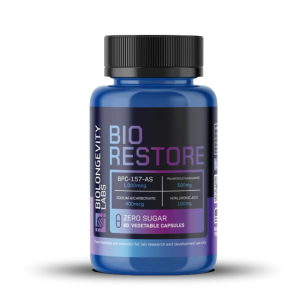
BioRestore
Price range: $179.97 through $971.84